Paradise Valley, Arizona
Roofers in Paradise Valley, AZ
Estate and residential roofs in Paradise Valley need careful assessment before repair or replacement: tile matching, hillside rules, and HOA packets included. Call Fountain Hills AZ Roofing at (602) 905-5339.
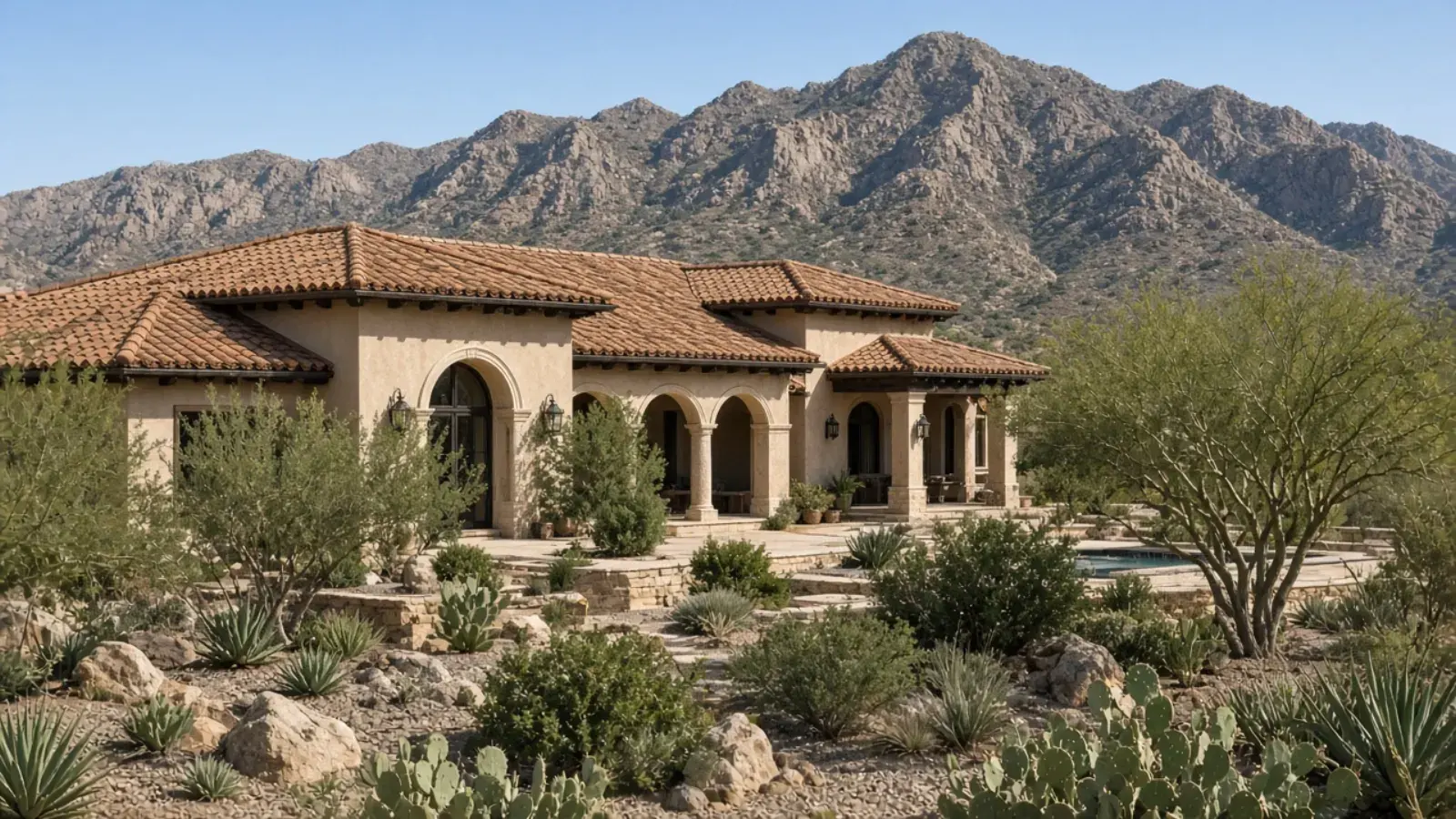
Paradise Valley roofing with estate-level detail
Paradise Valley wraps around Camelback and Mummy Mountain with large lots and roofs that are often more complex than a simple rectangular plan. Fountain Hills AZ Roofing schedules on-site assessments here for repair, replacement, and inspection. Fountain Hills is our primary city; Paradise Valley is a secondary area where access, material matching, and Town process usually need extra planning time. We write scopes after we see the roof, from the deck, ladder, or safe ground review as conditions allow.
Typical housing and roof types
Many Paradise Valley properties use expansive clay or concrete tile with numerous hips, valleys, crickets, and decorative parapets. Custom homes near the mountains may mix pitched tile with flat or low-slope foam or membrane wings. Older remodel layers sometimes hide under newer tile, so we check penetrations, prior patches, and underlayment before anyone commits to a price.
Tile systems here usually fail at the underlayment and flashings first, not the tile itself. Flat sections fail when coatings thin under UV, drains clog with desert dust, or parapet caps open. Shingle is less common on estate streetscapes but still appears on some outbuildings. We identify the assembly on your house before recommending a path.
Town permit basics (typically)
The Town of Paradise Valley runs building applications through its online Citizen Portal. Residential Building Permit packets commonly ask for a site plan, agent authorization when someone other than the owner submits, and an HOA Acknowledgement. Town demolition guidance requires a Demolition Permit when more than 12 square feet of roof structure will be removed, typically before the building permit. Thresholds and document lists can change. Verify the current Citizen Portal checklist with the Building Division (Town-published permitting line: 480-348-3692). If your project may disturb roof structure, change materials, or sit on a hillside lot, we flag those Town steps early.
HOA and hillside architectural review
Separate from Town permits, many Paradise Valley CC&Rs require Architectural Committee approval before exterior changes. Roof materials, flashings, vents, gutters, and colors are commonly listed. Build that review into your timeline; associations move on their own calendars.
If your property lies in the Town's Hillside Development Area, Town hillside guidance says modifications (including roof material changes) may require Hillside Building Committee review. Hillside roof colors must typically blend with surroundings and stay at a maximum LRV of 38, subject to committee approval. Contact the Hillside Development Administrator (Town-published line: 480-348-3528) to confirm whether your lot is hillside-designated before you order materials.
Heat, UV, and monsoon patterns
Paradise Valley roofs take the same East Valley UV load as Fountain Hills and Scottsdale: long summers and surfaces far hotter than the air. Sealants shrink, pipe boots crack, and older felt under tile becomes brittle. The National Weather Service Phoenix Weather Forecast Office sets monsoon season as June 15 through September 30, when brief storms drive rain under lifted tiles and into open parapet details. Mountain-adjacent lots can see stronger outflow winds; after the first significant storm, check valleys, scuppers, and recent patches, especially on sprawling tile roofs.
Neighborhoods and areas we serve
We schedule Paradise Valley visits near Camelback and Mummy Mountain corridors, including estate neighborhoods off Lincoln Drive, Tatum Boulevard approaches, and adjoining lanes within our service radius. Lot access, HOA gates, and staging vary; share gate codes and parking limits when you book.
What repair vs. replacement typically looks like
Repair here often means matching clay or concrete tiles, rebuilding a valley or wall flashing, renewing boots at penetrations, or recoating sound foam. Replacement conversations start when underlayment is spent across large areas, leaks keep returning, or hillside and HOA rules require a material change. On complex roofs we break the scope into clear phases. Financing may be available; ask your Fountain Hills AZ Roofing representative for details.
Services and nearby coverage
Paradise Valley work coordinates with our Fountain Hills routes and Scottsdale coverage. See roof repair, roof replacement, and roof inspection.
Paradise Valley roofing FAQs
Do Paradise Valley roofing projects typically need a Town permit?
The Town of Paradise Valley directs most structural work through its Building Permit process and Citizen Portal. Roof work that removes more than a small amount of roof structure typically also involves a Demolition Permit before the building permit. Town demolition guidance describes a 12-square-foot threshold for roof structure. Confirm the current threshold and required uploads for your exact scope with Town staff.
What is Hillside Building Committee review?
Properties inside Paradise Valley's Hillside Development Area may need Hillside Building Committee approval for modifications that include roof materials. Town hillside guidance also limits hillside roof colors to finishes that blend with surroundings and stay at a maximum light reflectance value (LRV) of 38, subject to committee approval. Ask the Hillside Development Administrator whether your lot is hillside-designated before you lock in materials.
Does my Paradise Valley HOA need to approve a re-roof?
Many Paradise Valley subdivisions require prior written Architectural Committee approval for exterior changes, including roof materials, flashings, vents, gutters, and colors. Town building applications commonly ask for an HOA Acknowledgement upload. HOA approval and Town permits are separate steps. Plan time for both.
What roof systems are common on Paradise Valley estates?
Large clay or concrete tile roofs over complex footprints are common, often with multiple hips, valleys, and decorative parapets. Flat or low-slope foam or membrane sections appear on additions and contemporary wings. Matching tile profiles and staging on tight lots matter as much as finding the leak path.
How do heat and monsoon weather affect Paradise Valley roofs?
East Valley roofs see intense UV and surface temperatures well above air temperature in summer. The National Weather Service Phoenix office defines monsoon season as June 15 through September 30. Wind-driven rain after months of heat commonly exposes failed underlayment, open flashings, and worn coatings on flat sections.
When should I repair versus replace a Paradise Valley roof?
Isolated cracked tiles, localized flashing failures, or a sound foam roof that only needs coating renewal are often repair scopes. Widespread underlayment failure, repeated leaks across many valleys, or a system that no longer meets hillside or HOA rules typically leads to replacement. We document conditions with photos first.
How do I schedule a Paradise Valley roof assessment?
Call (602) 905-5339 or use the form on this page. We visit your property, review access and material matching, and provide a written quote after the assessment. Financing may be available; ask your Fountain Hills AZ Roofing representative for details.
Request a Paradise Valley visit
Call (602) 905-5339 or use the quote form on this page. We review the roof, note Town and HOA considerations we can see, and leave a written quote after the visit.